
What is the One Person Trade Desk?
A real trade desk has 10 roles, 8–20 people, and ~$5M in annual cost. OPTD is what happens when one operator fills all ten, with Claude Code, deep methodology, and a headcount of one.
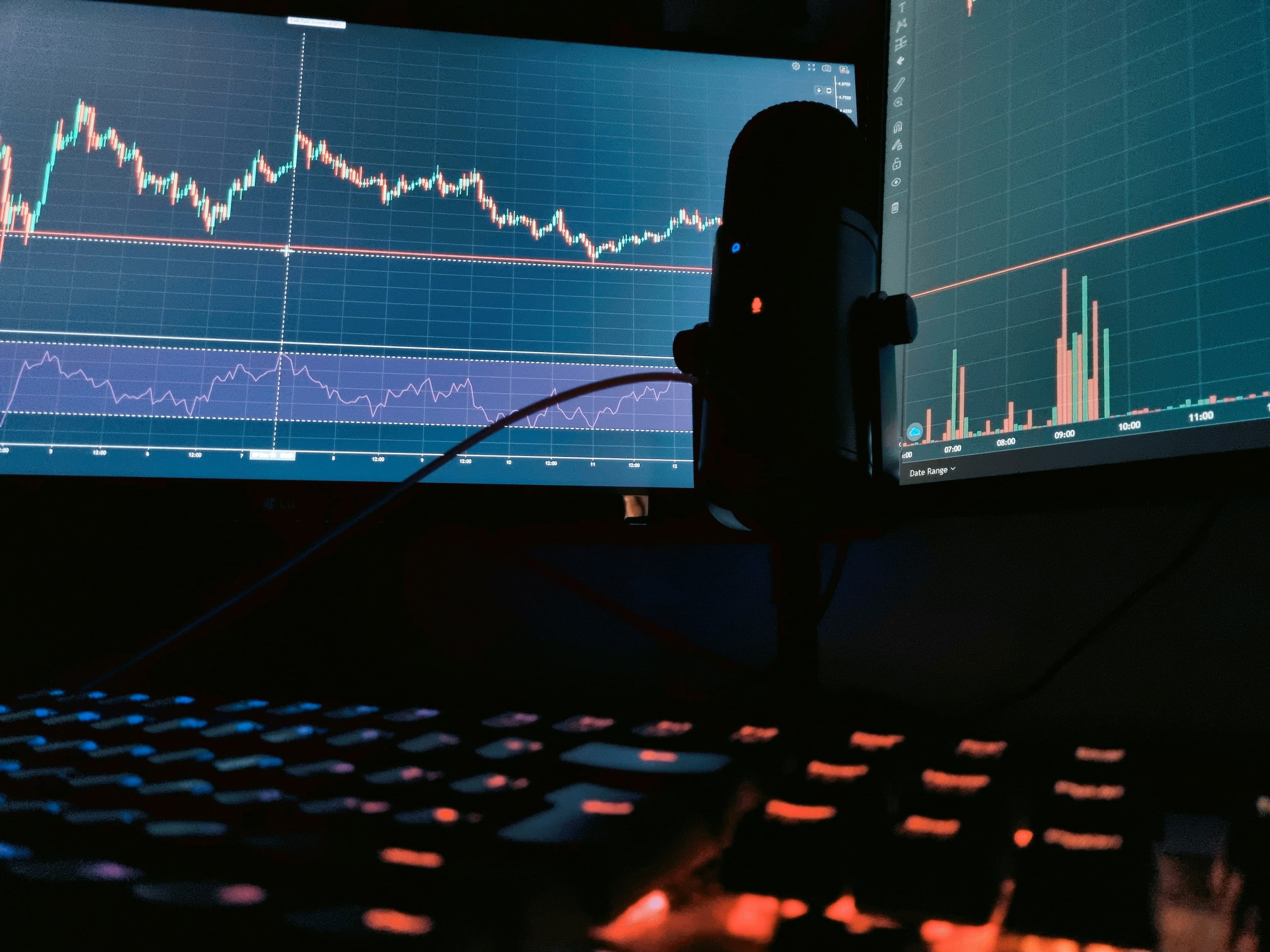
A real institutional trade desk has ten functional roles, eight to twenty people, and around five million dollars in annual operating cost. The One Person Trade Desk (OPTD) is what happens when one operator fills all ten roles, with Claude Code as the workbench and a headcount of one.
This post is the canonical answer to "wait, what is this thing?" If you landed here from YouTube or X, start here.
The org chart, collapsed
Walk into any prop shop, hedge fund, or systematic CTA and you'll find the same ten roles, regardless of size. Here's what each one actually does at a real desk, and what fills it at OPTD:
| Role | At a real desk | At OPTD |
|---|---|---|
| Portfolio Manager | Decides what to trade, when, how much. Owns P&L. | The human. Judgment, regime reads, discretionary calls. |
| Quant Researcher | Generates and tests ideas. Builds models. Designs experiments. | Claude Code + me: indicator RE, backtest sweeps, sim runs. |
| Quant Developer | Productionizes research. Signal engines, execution algos. | Claude Code (I direct): kernels, indicator ports, ACSIL studies. |
| Execution Trader | Works orders intelligently. Manages slippage and fills. | Sierra Chart ACSIL Order Manager: pyramid logic, exits, fills. |
| Risk Manager | Sets limits, runs stress tests, monitors exposures. Independent. | DD profiler, Monte Carlo bust analysis, 7-gate stress test. |
| Operations | Reconciles trades, catches breaks, audits daily P&L. | Daily reconciliation, chart-ingest parity, log parsers. |
| Performance / TCA | Attributes returns. Measures execution quality. Finds edge leaks. | MFE/MAE on tick data, LLM journal review. |
| Data Engineering | Owns the data plumbing: feeds, history, normalization. | SCID reader, parquet cache, tick parsers. |
| Tech Infrastructure | OMS, EMS, monitoring, alerting — the whole production stack. | Front-end journal, backend database, Python scripts. |
| Compliance | Audit trails, rule-violation flags, behavioral surveillance. | Pre-market checklists, rule violation tracking, cooldowns. |
At a typical $5M/year desk, each "real desk" column is at least one human. Often two or three. At OPTD, each is a workflow: sometimes a script, sometimes a Claude Code session, sometimes a hardened piece of ACSIL or Python. One operator. Ten roles. A workbench made of AI.
What changed
Three things made this possible in the last 18 months:
- Claude Code (and tools like it). A senior-engineer-equivalent collaborator that can read your entire repo, run your tests, profile your indicators, and ship code. The bottleneck stopped being keystrokes.
- Cheap, fast tick data + commodity compute. A laptop can replay years of MES tick data through a custom matching engine in minutes. What needed a colo cage a decade ago runs on a desk.
- Methodology as the moat. When code generation is cheap, the edge moves up the stack. the hard-to-copy part is the process: how you reverse engineer indicators, design backtests that don't lie to you, profile risk like an adult.
The punchline: what costs $5M/year at a hedge fund, built for under $150/month in tools.
What OPTD is not
- Not a course. There's no "secret strategy." If a single strategy could be sold, it would already be arbitraged out.
- Not a signal service. I don't sell calls. The operator-in-the-loop is the product.
- Not a brokerage or fund. I'm building my own desk. You can watch, copy the methodology, and build yours.
- Not a vibe. Every claim above maps to specific code, specific backtests, and a real account.
What you'll find here
This blog is the long-form companion to the YouTube channel. Expect posts in four buckets:
- Guides: how to reverse engineer a closed-source indicator, how to design a backtest that survives walk-forward, how to profile drawdowns properly.
- Insights: what I'm learning about markets, methodology, and using AI to do real engineering work.
- Case studies: full teardowns of a strategy, a bust, or an interesting day on the desk.
- Product updates: when an OPTD tool graduates from "internal" to "you can use it too."
If you only read one category, read the case studies. They're where the work becomes legible.
Where to go next
- Watch the build: youtube.com/@onepersontradedesk
- Day-to-day: @drewthomas on X
- The desk's handle: @optdesk on X
The next post will be the first real teardown. Subscribe wherever you read.